
Fintech
Cleo
Cleo turned fast-moving paid acquisition into a repeatable Meta testing engine, using AdManage.ai to launch more creative, keep structure clean, and remove manual setup drag.

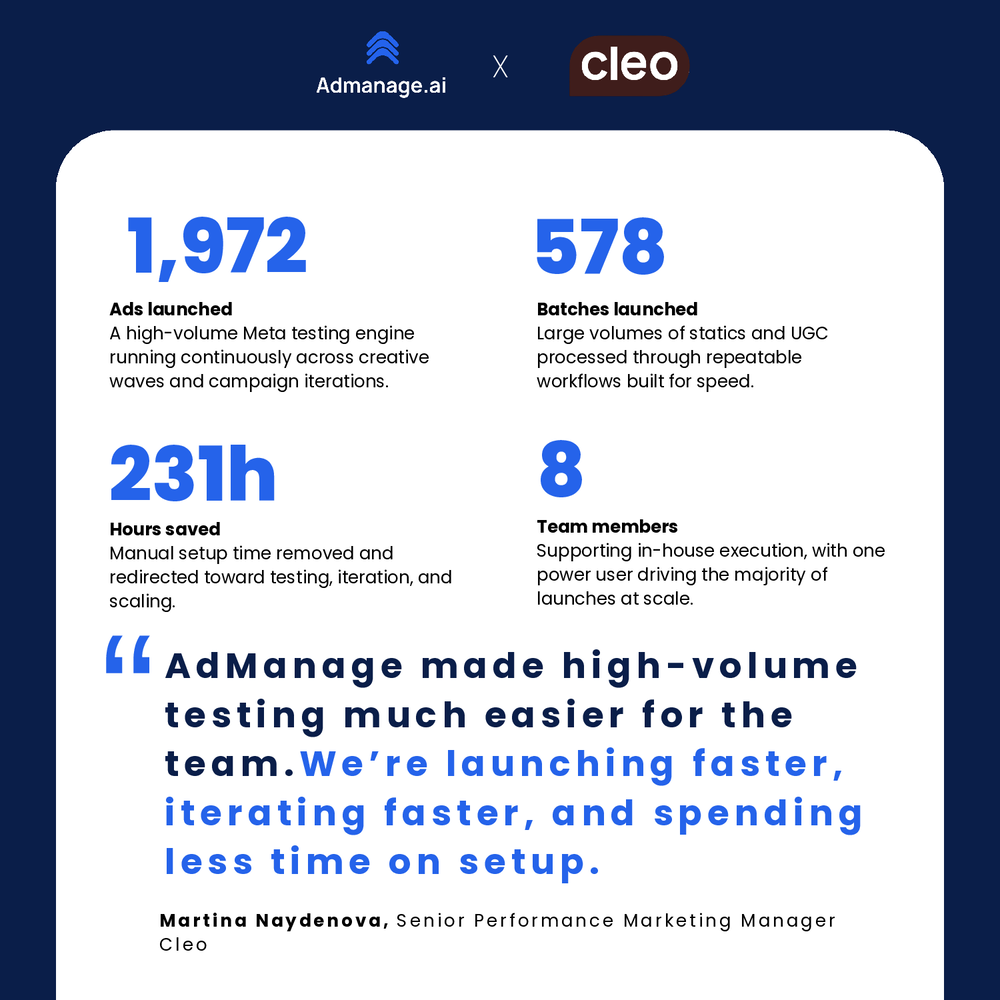
1,972
Meta ads launched
231h
of setup time saved
578
creative batches launched
8
team members supported
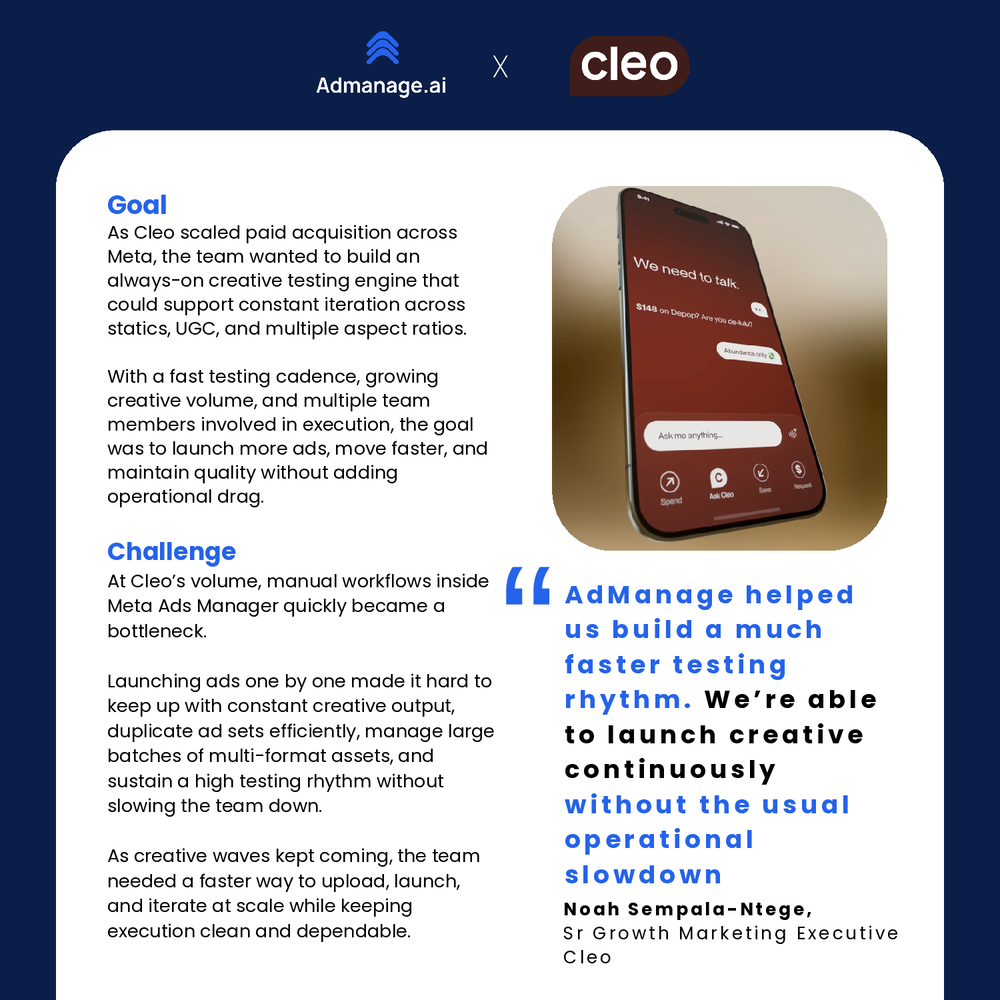
AdManage made high-volume testing much easier for the team. We're launching faster, iterating faster, and spending less time on setup.
Challenge
- Cleo's testing cadence had outgrown one-by-one manual setup.
- Constant creative waves across statics, UGC, and multiple aspect ratios made one-by-one launches too slow.
- The paid acquisition team needed a shared workflow that kept speed, quality, and account structure aligned.
Solution
- AdManage.ai became the shared execution layer for uploading large creative batches, duplicating ad sets, and starting new tests quickly.
- Structured launch flows, templates, and reporting views kept naming, setup, and performance review consistent across fast cycles.
- One core operator could drive most launch volume while teammates contributed without adding handoff friction.
Outcomes
- 1,972 ads launched across continuous Meta testing cycles.
- 578 creative batches moved through repeatable workflows for statics and UGC.
- 231 hours redirected from manual setup into testing, iteration, and scaling.
Ready to launch like this?
See how your team can ship Meta ads without the Ads Manager grind.
See more case studies
View all →
Hair Supplement DTC
BYVIDA
The German hair supplement brand centralised creative uploads, standardised naming and tracking, and scaled creator ads, without adding headcount.
Read case study →
E-commerce Marketplace
Shopee
The e-commerce platform pulled creative from Google Drive, launched short drama ads in structured batches, and automated pausing, without adding headcount.
Read case study →
Global Remittance
MoneyGram
The global remittance brand unified multi-platform ad launches across 8 markets, scaling multi-language creative testing inside one workspace.
Read case study →