

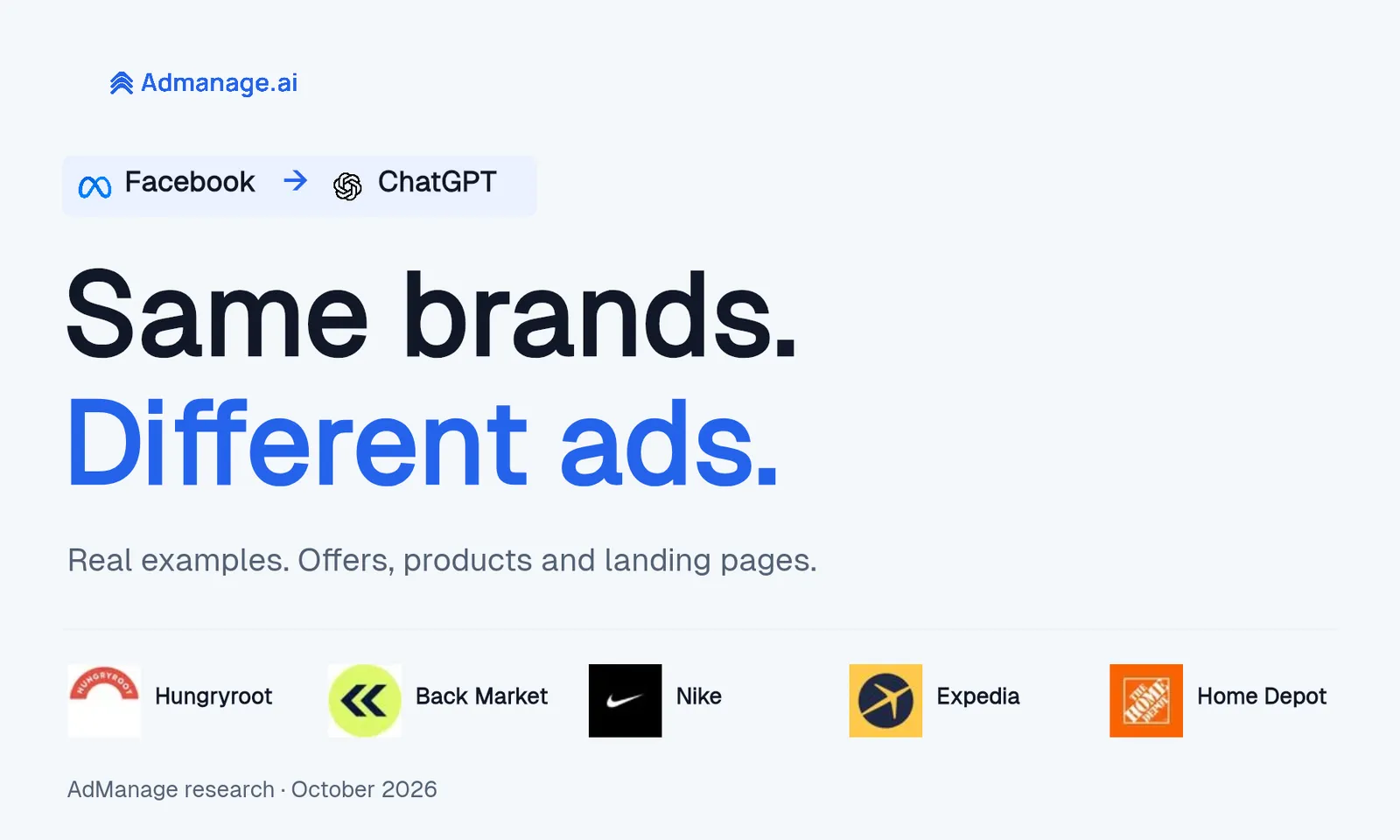
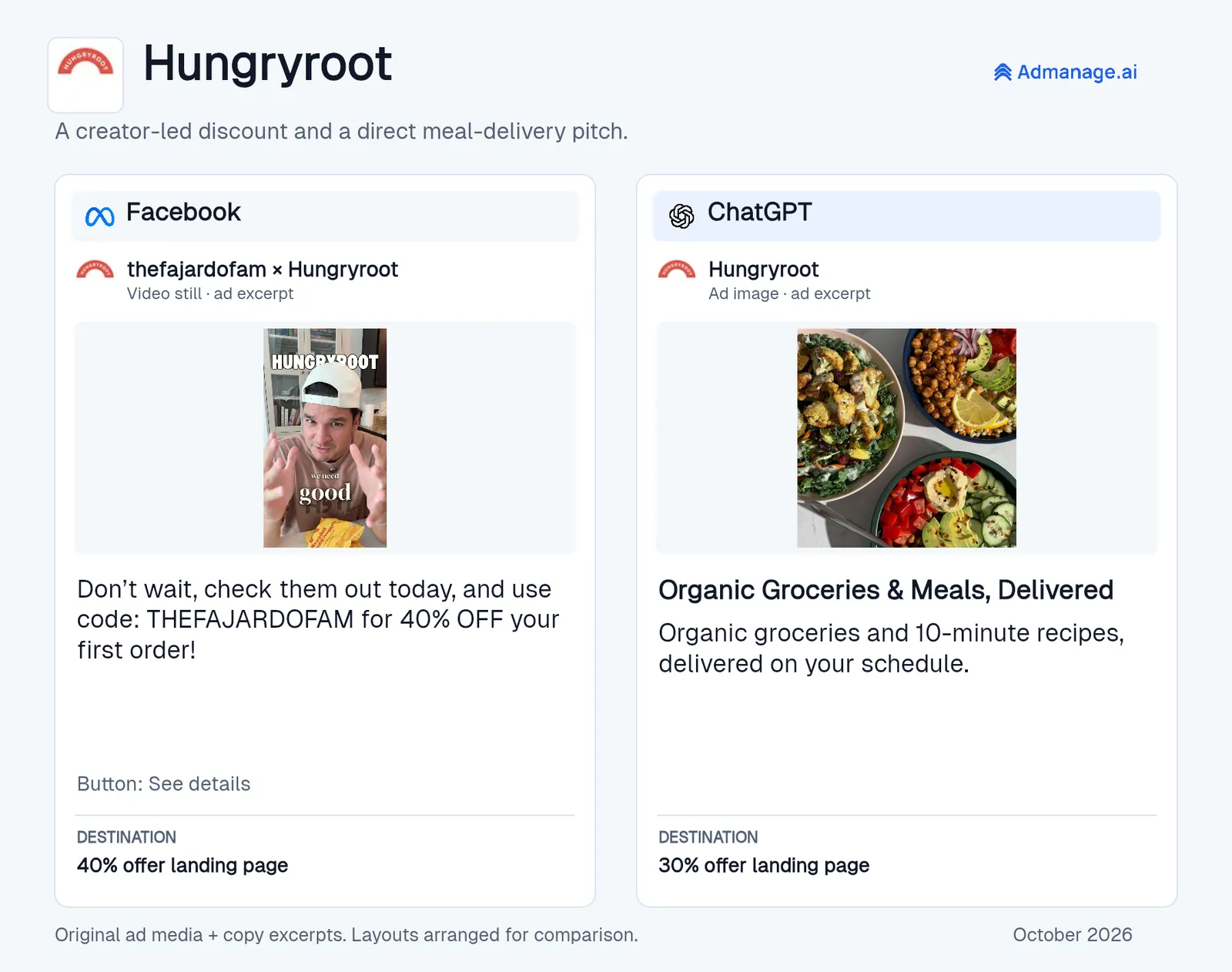
Hungryroot offers 40% off on a landing page used by its Facebook ads. On a page used by its ChatGPT ads, the offer is 30% off.
If you already run Facebook ads, ChatGPT ads give you another place to test your offer. But what should you carry across? The product? The discount? The landing page? Or just the reason someone would buy?
We looked at 1,869 ChatGPT ads and 3,210 Facebook ads from five brands we could match in AdScan: Hungryroot, Back Market, Nike, Expedia and The Home Depot. Then we followed the links and compared what those brands ask people to do.
Here are the changes worth paying attention to, with real ad examples on each side.
Five brands, two very different places to advertise
These are five of the larger advertisers in our ChatGPT sample with usable Facebook matches in the AdScan ad library.
| Brand | ChatGPT ads reviewed | Facebook ads reviewed | The difference to watch |
|---|---|---|---|
| Expedia | 649 | 143 | Travel inspiration and direct booking searches |
| Hungryroot | 428 | 236 | Creator-led offers and a different landing-page discount |
| Back Market | 320 | 251 | App installs and website shopping |
| The Home Depot | 258 | 2,343 | Delivery promotions and product comparisons |
| Nike | 214 | 237 | Different products, with much more detail in the ChatGPT listings |
The figures describe what we could review, rather than total advertising activity. Some ads repeat a message or vary a product size. They are not a count of original creative ideas.
Hungryroot: change the offer, not just the headline
View the original Hungryroot ad images
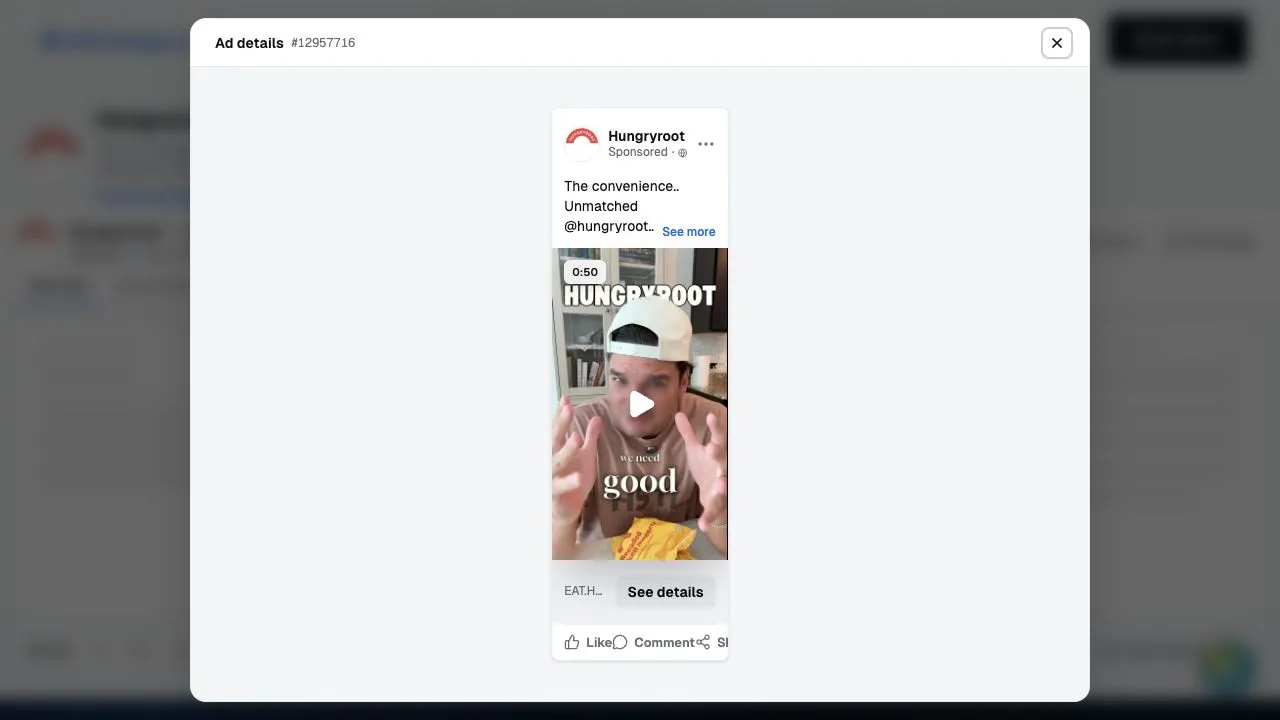
Facebook ad preview in AdScan
Original ChatGPT ad creative
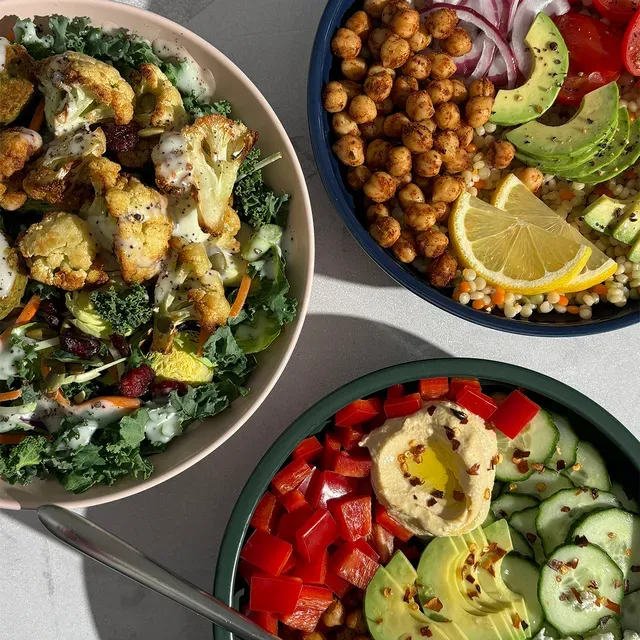
Organic Groceries & Meals, Delivered — Organic groceries and 10-minute recipes, delivered on your schedule.
See this Facebook ad in AdScan · Open the ChatGPT ad’s destination
On Facebook: the example is a creator video about feeding a family. It brings the service into an everyday situation, then gives people a code for 40% off their first order.
On ChatGPT: the example leads with “Organic Groceries & Meals, Delivered.” The description is direct: “Organic groceries and 10-minute recipes, delivered on your schedule.”
But the bigger change happens after the click.
71 ChatGPT ads link to a page currently offering 30% off. Another page, used by 64 Facebook ads, offers 40% off. Both pages also advertise a free gift in every delivery.
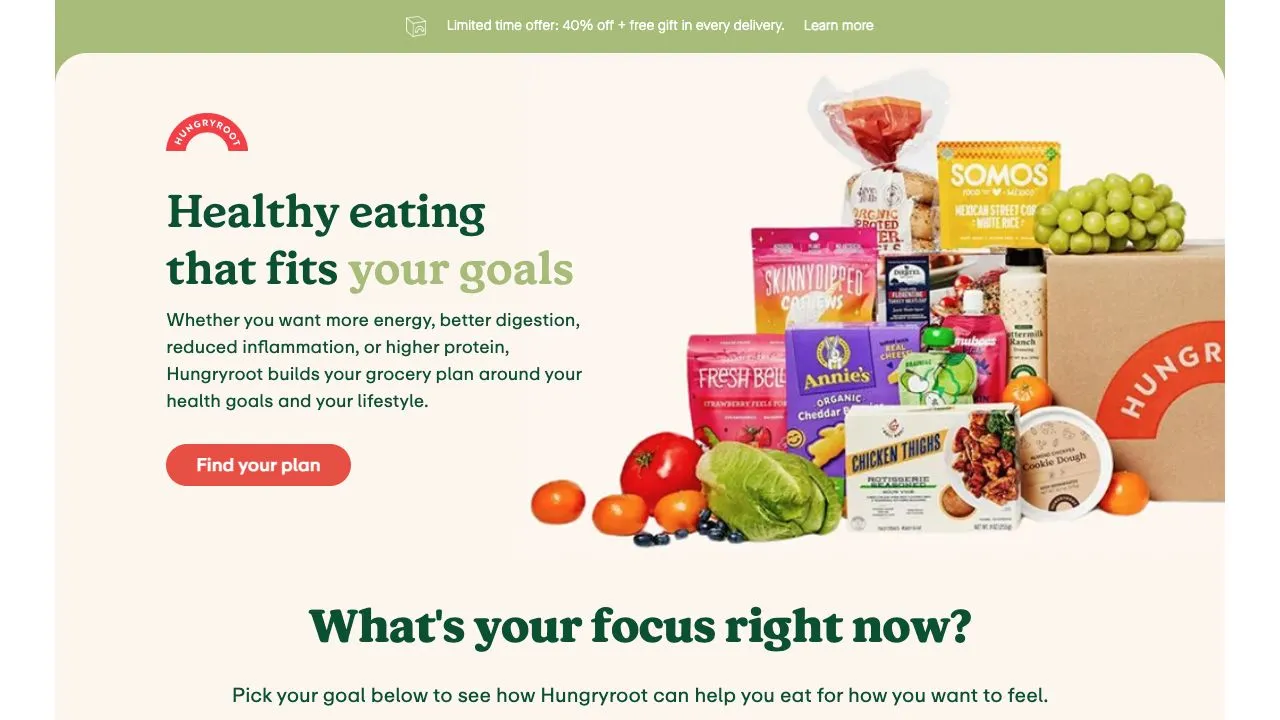
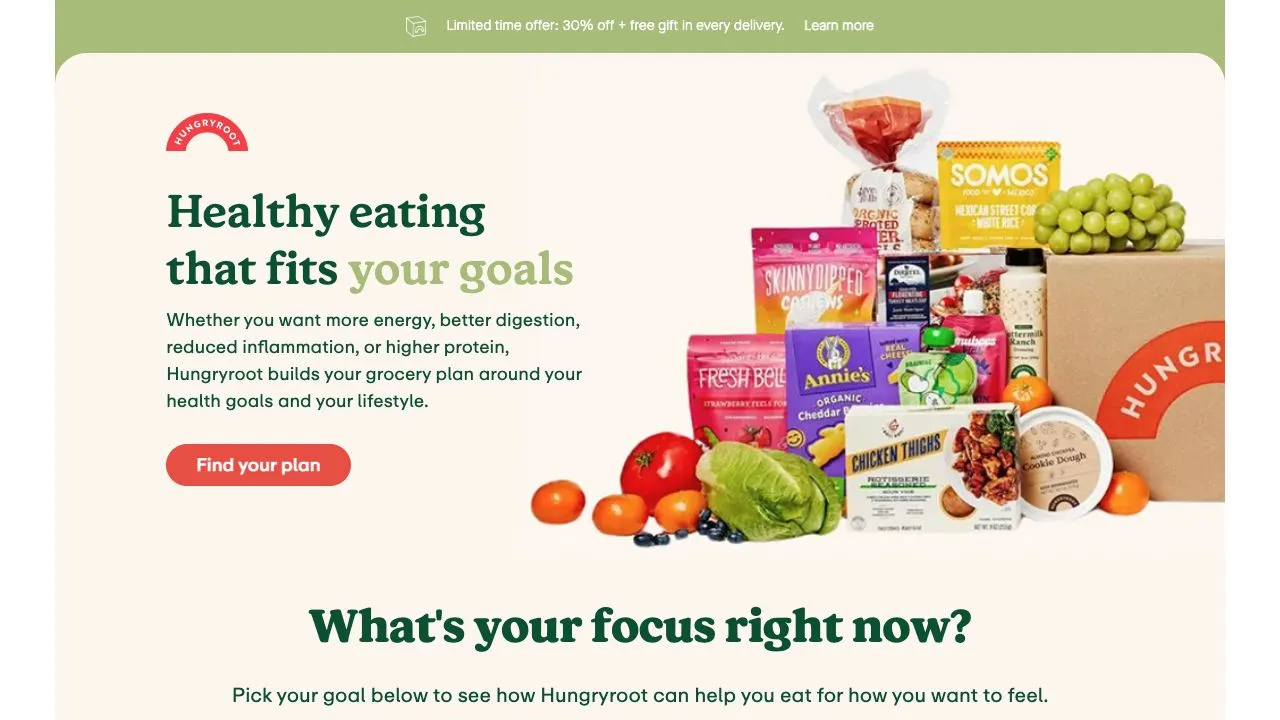
We checked the ChatGPT-linked page and the Facebook-linked page on 31 October 2026. These are two specific pages, not a claim that every visitor from each channel receives the same offer.
There is another useful detail: 117 of Hungryroot’s Facebook ads mention “40%.” None of its ChatGPT ad titles or descriptions includes a percentage. You would miss the ChatGPT discount if you only read the ad.
What to try: test the introductory offer separately for each channel. Keep the landing-page offer in your analysis alongside the headline, creative and conversion rate. A quieter ad can still lead to a promotional page.
Back Market: decide whether you want an app install or a purchase
View the original Back Market ad images
Facebook ad preview in AdScan
Original ChatGPT ad creative

Galaxy, up to 70% off — A refurbished Galaxy for up to 70% less.
See this Facebook ad in AdScan · Open the ChatGPT ad’s destination
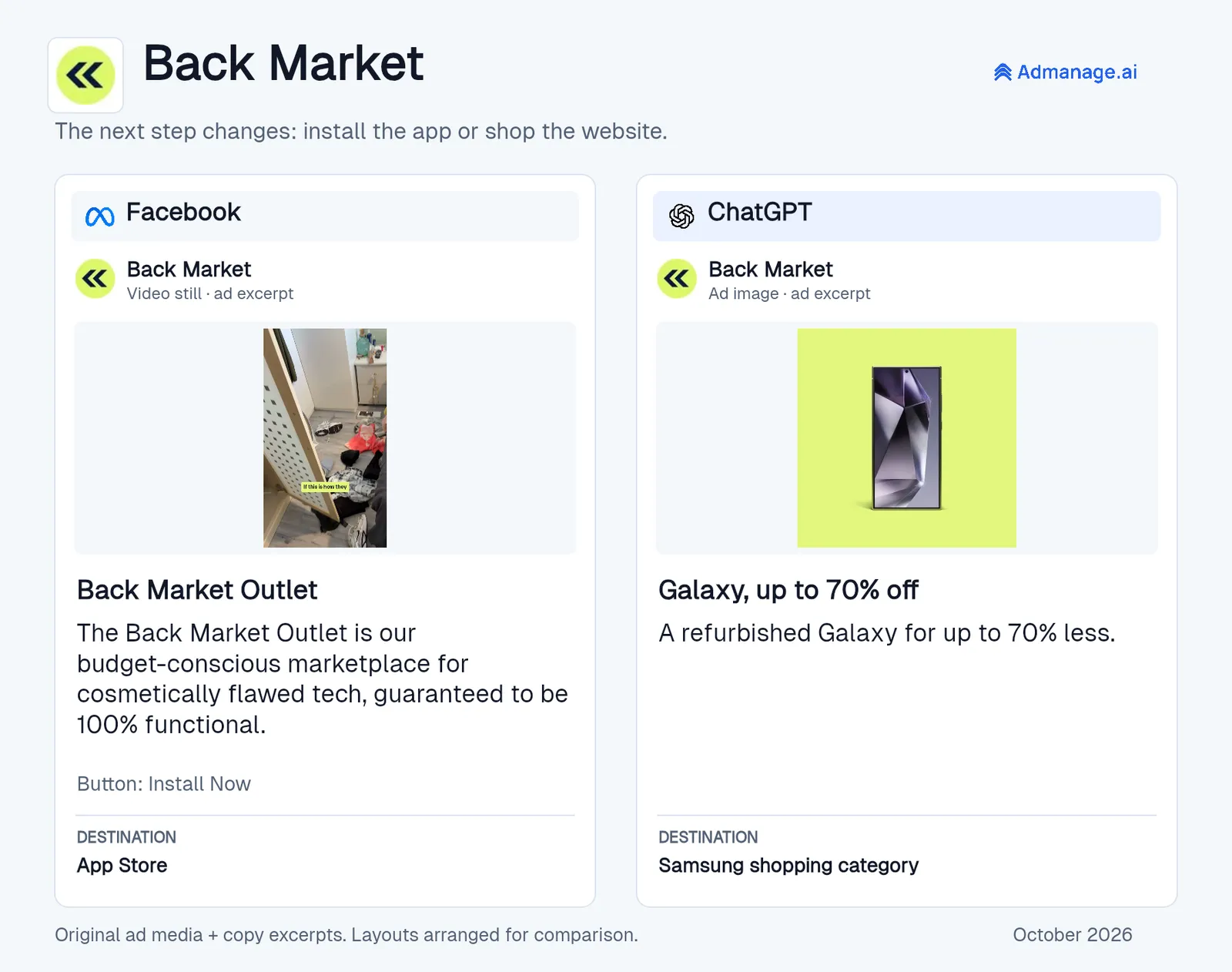
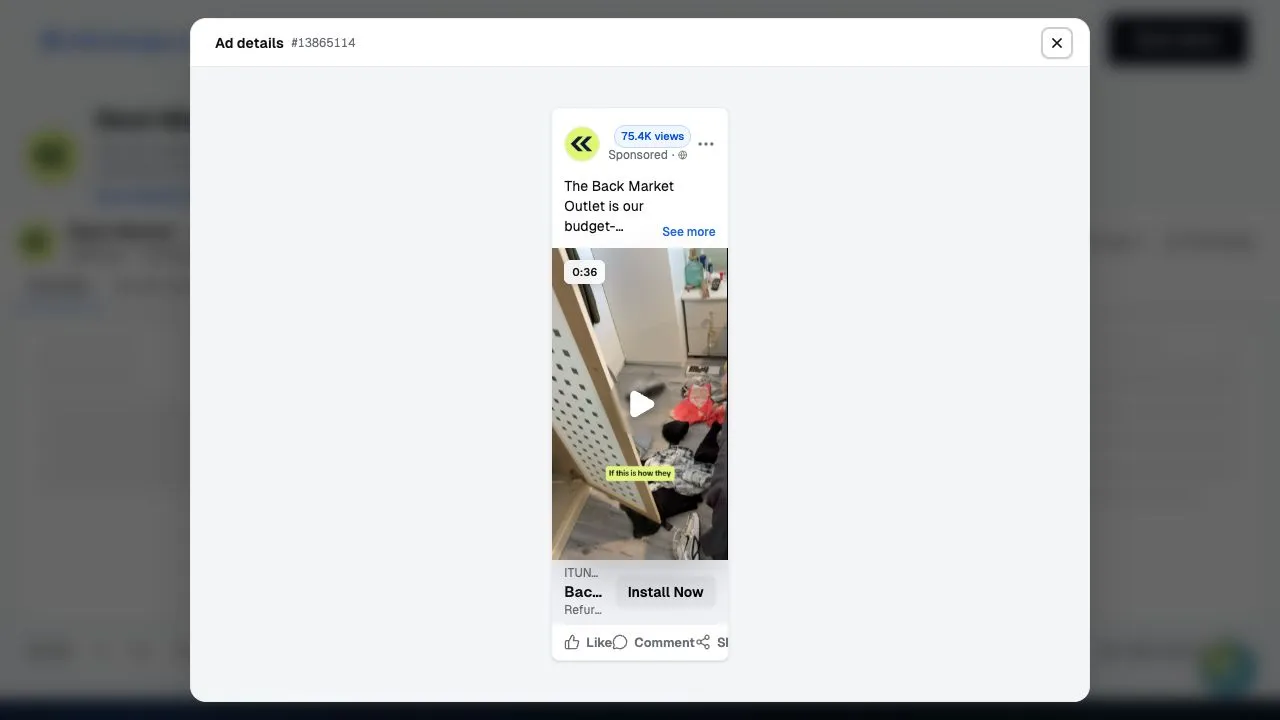
On Facebook: this Back Market Outlet ad explains that cosmetically flawed tech can still be fully functional. Its button asks people to install the app.
On ChatGPT: the example says “Galaxy, up to 70% off,” with a short description about refurbished Galaxy phones. It links to the Samsung shopping category on Back Market’s website.
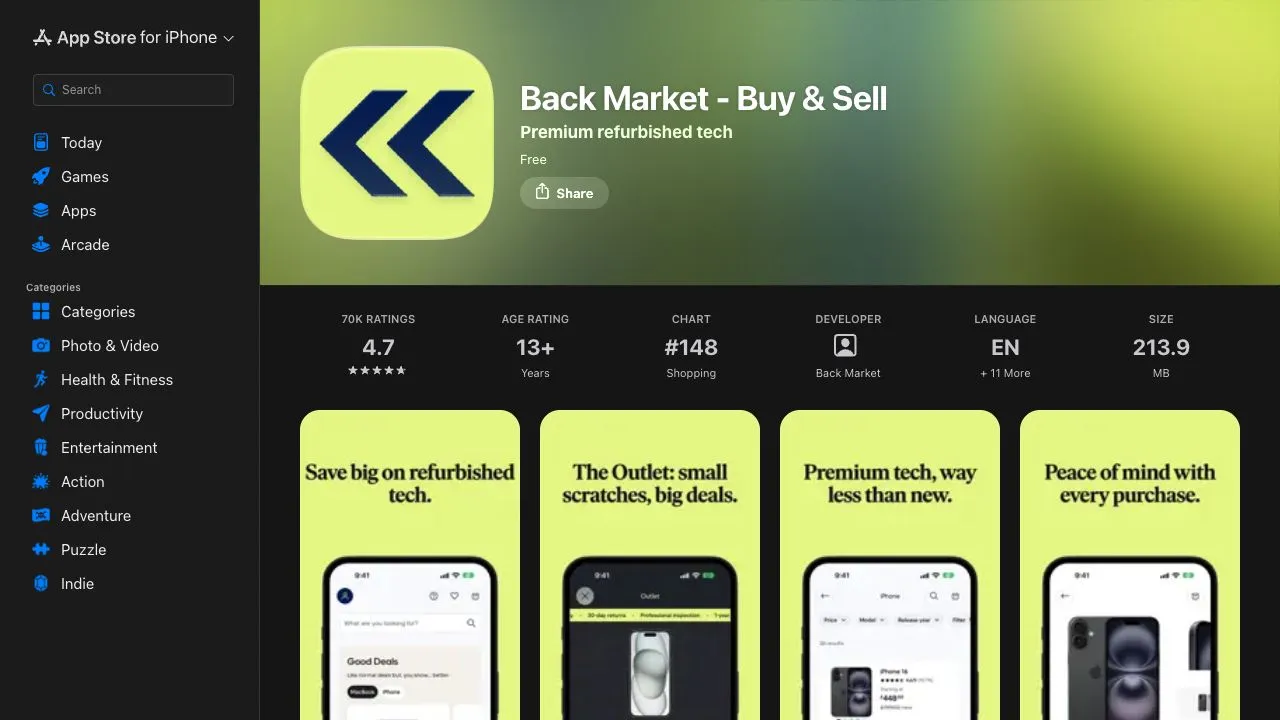
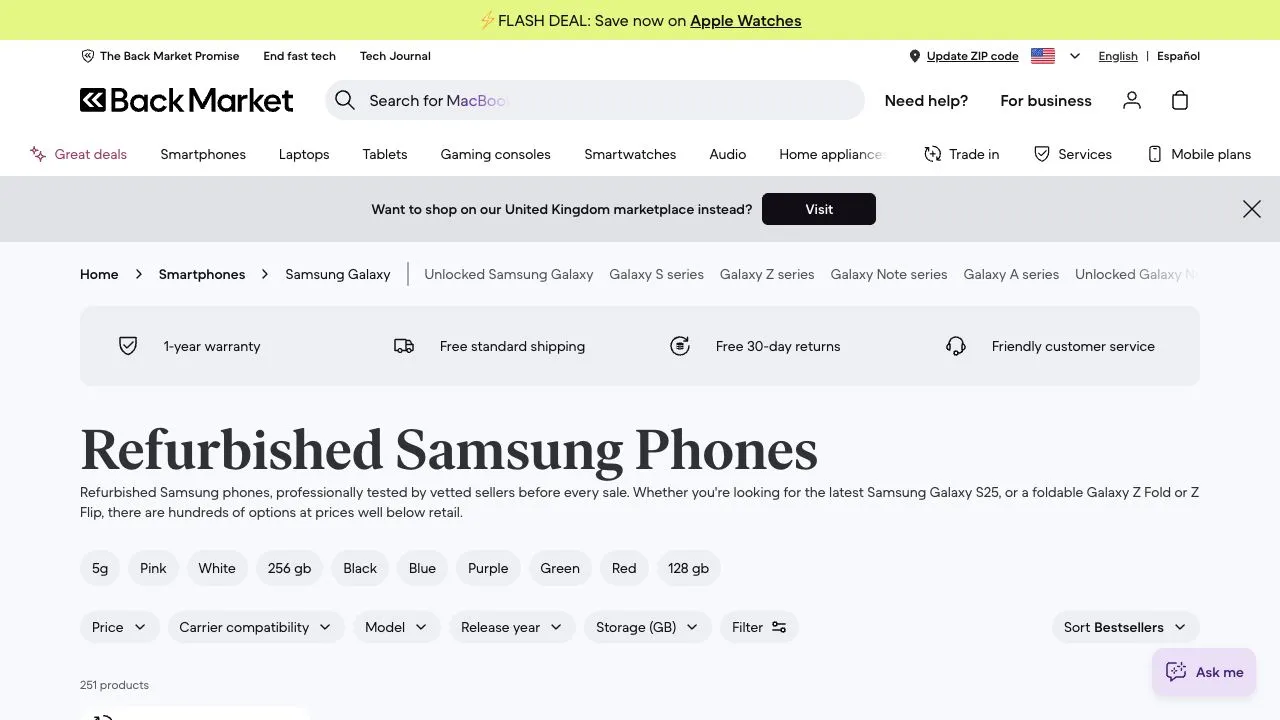
That difference appears across the wider sample. 170 of 251 Facebook ads use an Install Now button, and 138 link directly to an app store. All 320 ChatGPT ads link to Back Market’s website, including 272 links to individual product pages.
The lesson is about what you want the click to achieve. An app-install ad has to make the app worth downloading. A shopping ad has to help someone choose an item and trust the seller.
What to try: choose the destination before adapting the creative. If your Facebook campaign is designed to acquire app users, write a separate website-shopping version for your ChatGPT test. Review each against its own goal.
Nike: bring the right product, with the details a buyer needs
View the original Nike ad images
Facebook ad preview in AdScan
Original ChatGPT ad creative
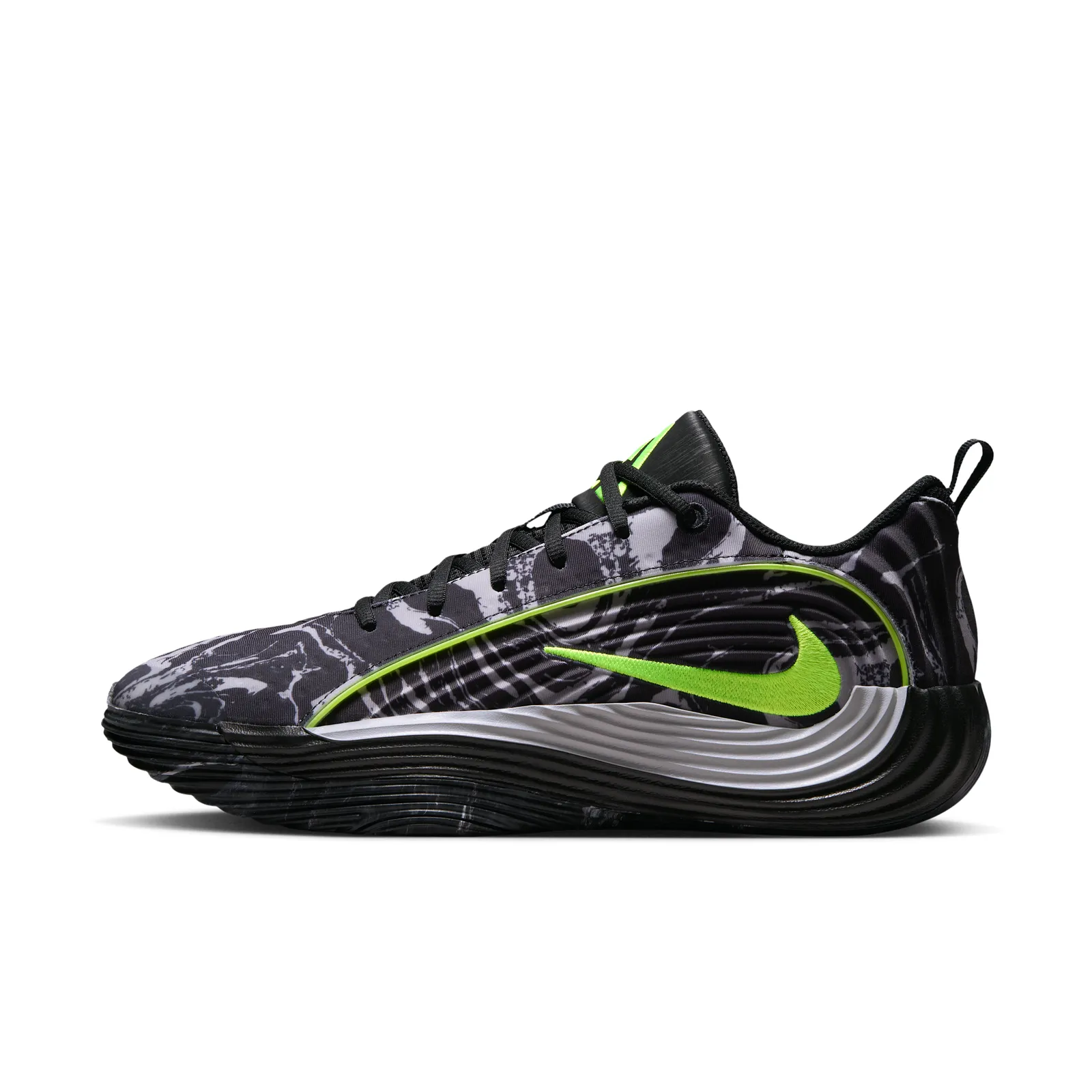
Nike Men's Giannis Immortality 5 Basketball Shoes in Black, Size: 3.5 | IM5130-002 — Giannis is in fifth gear, no matter if it’s November, January or June. The Giannis Immortality 5 helps keep the Freak in the driver’s seat. Double stacked foam and elite traction t…
See this Facebook ad in AdScan · Open the ChatGPT ad’s destination
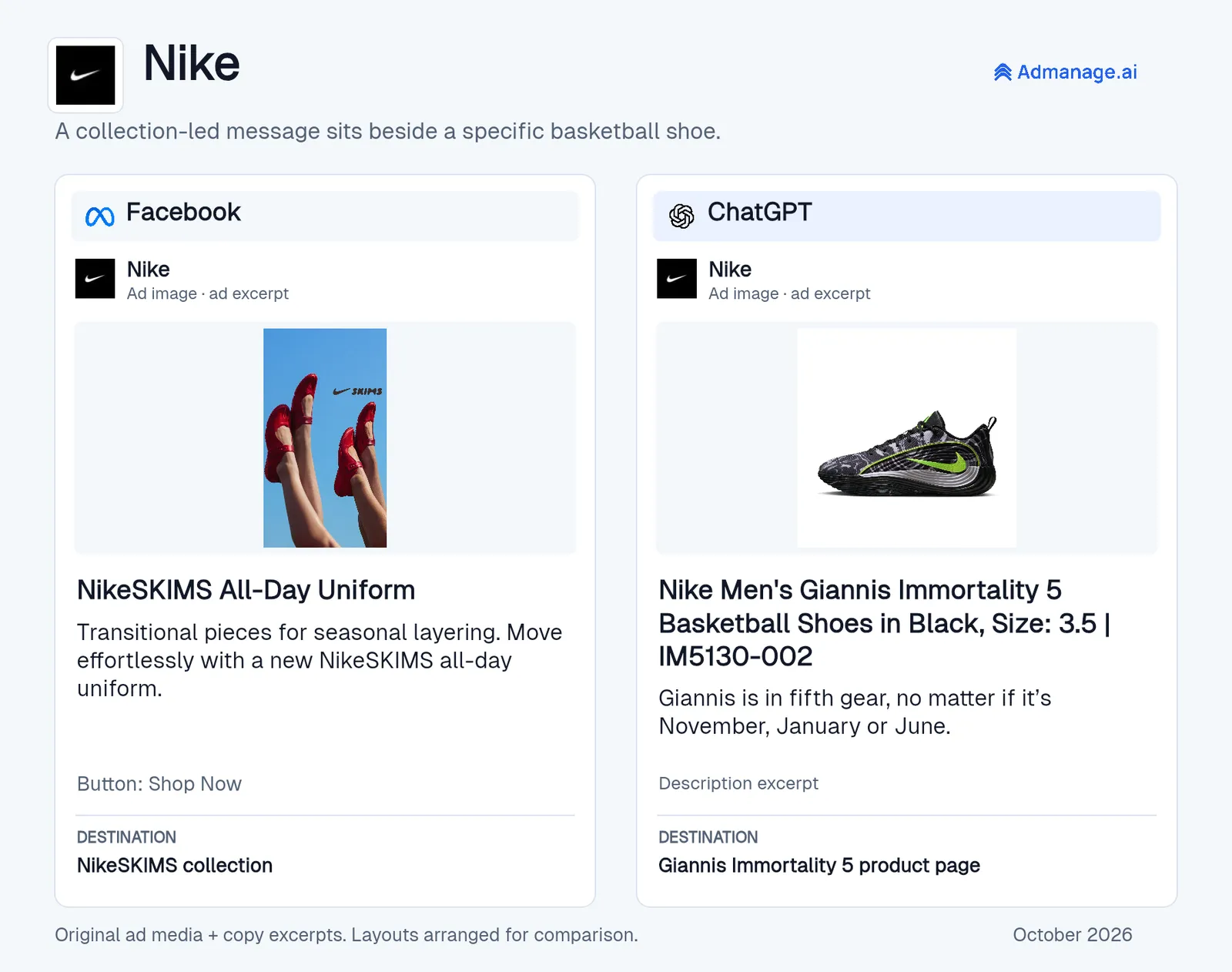
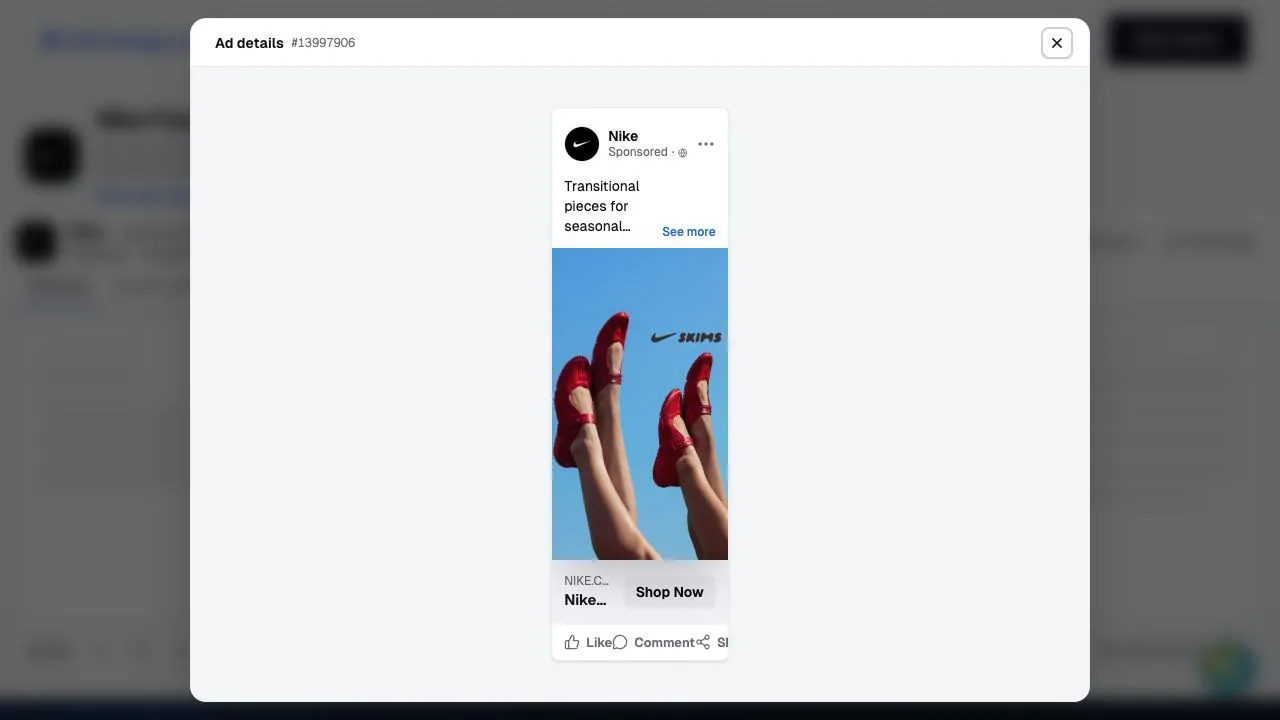
On Facebook: the NikeSKIMS example sells a collection and a look: transitional pieces, seasonal layering and an all-day uniform.
On ChatGPT: the example names a specific pair of Giannis Immortality 5 basketball shoes, including the colour, size and style code. Its longer description goes into cushioning, traction and support.
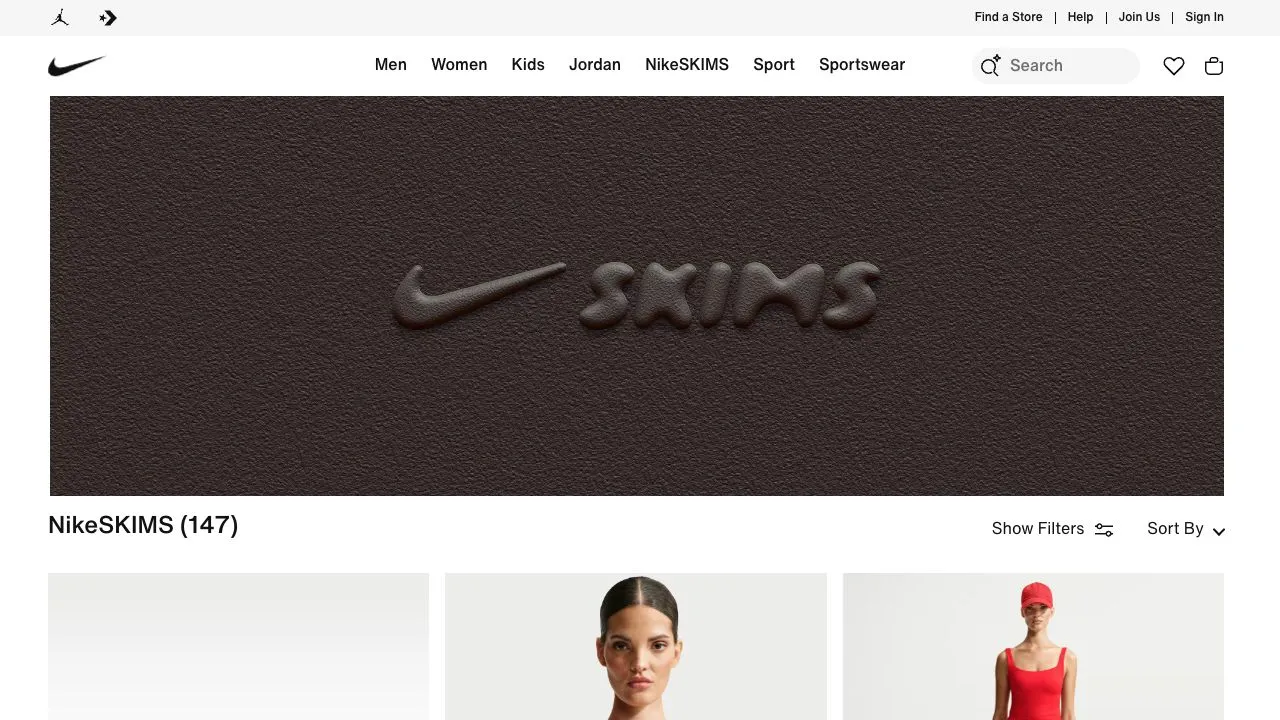
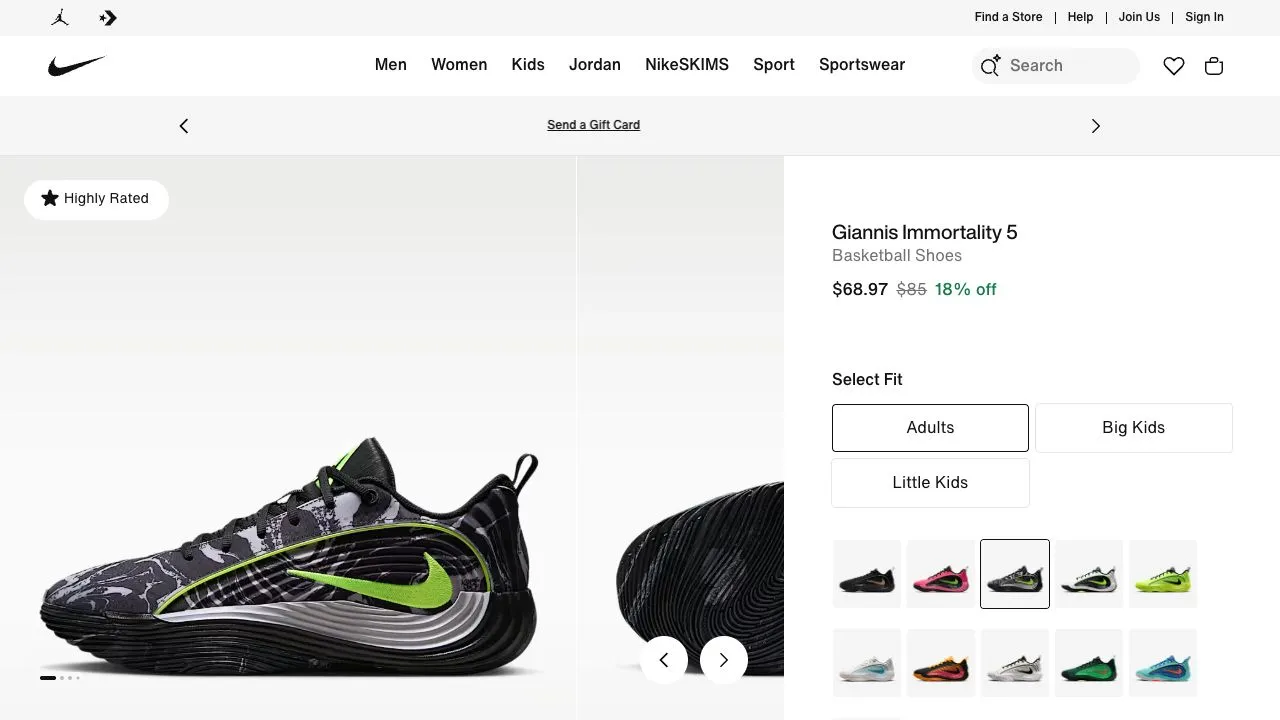
Nike changes the merchandise, too. 116 of Nike’s 214 ChatGPT ad titles mention basketball. In the Facebook sample, 70 ads mention Air Monarch and 41 mention NikeSKIMS.
Every Nike ChatGPT title also includes a size. The 214 ads lead to 126 different product URL paths. That helps explain why a large ad count does not necessarily mean hundreds of separate concepts.
What to try: choose products that fit the questions you want to reach. Make the model, use case, size and relevant features easy to understand. Keep that product information accurate, and check the actual preview before deciding how much copy a viewer will see.
The longer descriptions in these listings are not proof that ChatGPT displays every word, or that longer copy performs better.
Expedia: move from the story to the task
View the original Expedia ad images
Facebook ad preview in AdScan
Original ChatGPT ad creative

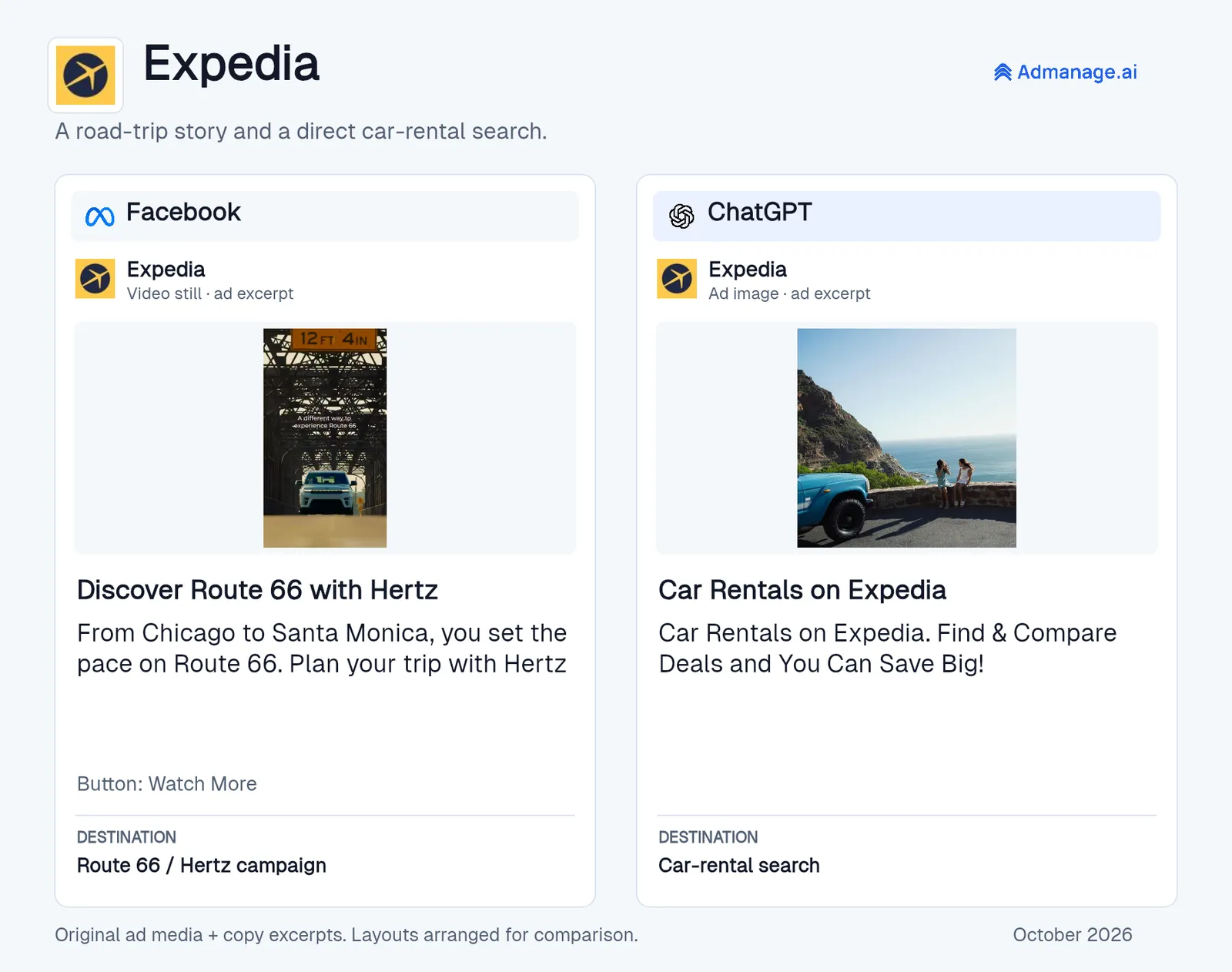
Car Rentals on Expedia — Car Rentals on Expedia. Find & Compare Deals and You Can Save Big!
See this Facebook ad in AdScan · Open the ChatGPT ad’s destination
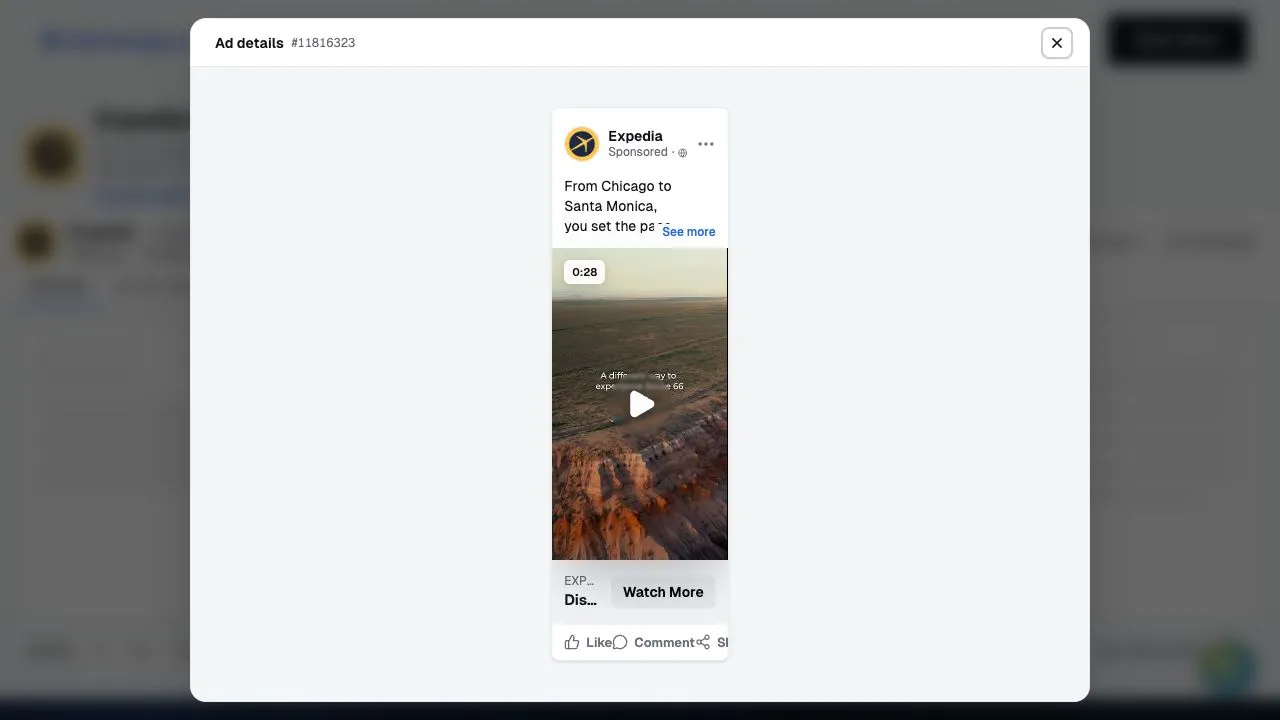
On Facebook: “Discover Route 66 with Hertz” invites someone to picture a road trip, from Chicago to Santa Monica. The creative gives them a reason to start thinking about travel.
On ChatGPT: “Car Rentals on Expedia” gets straight to the task. The message is about finding and comparing deals, and the link opens the car-rental search page.
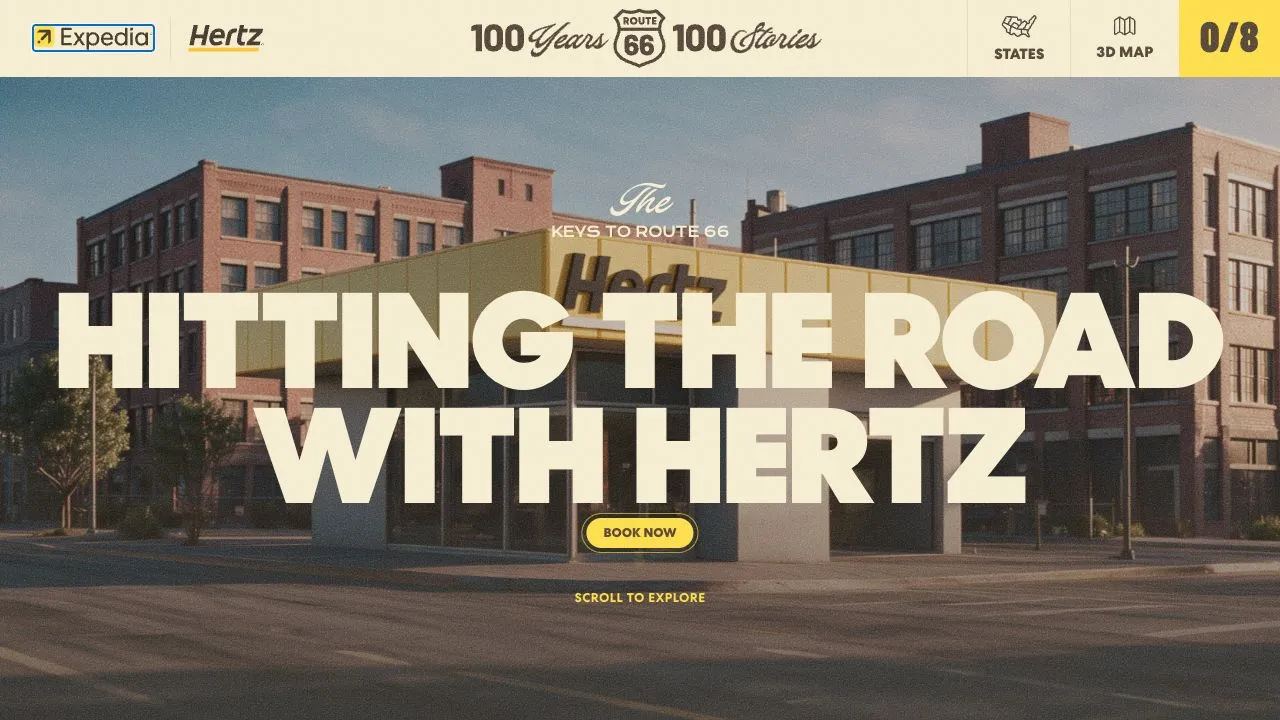
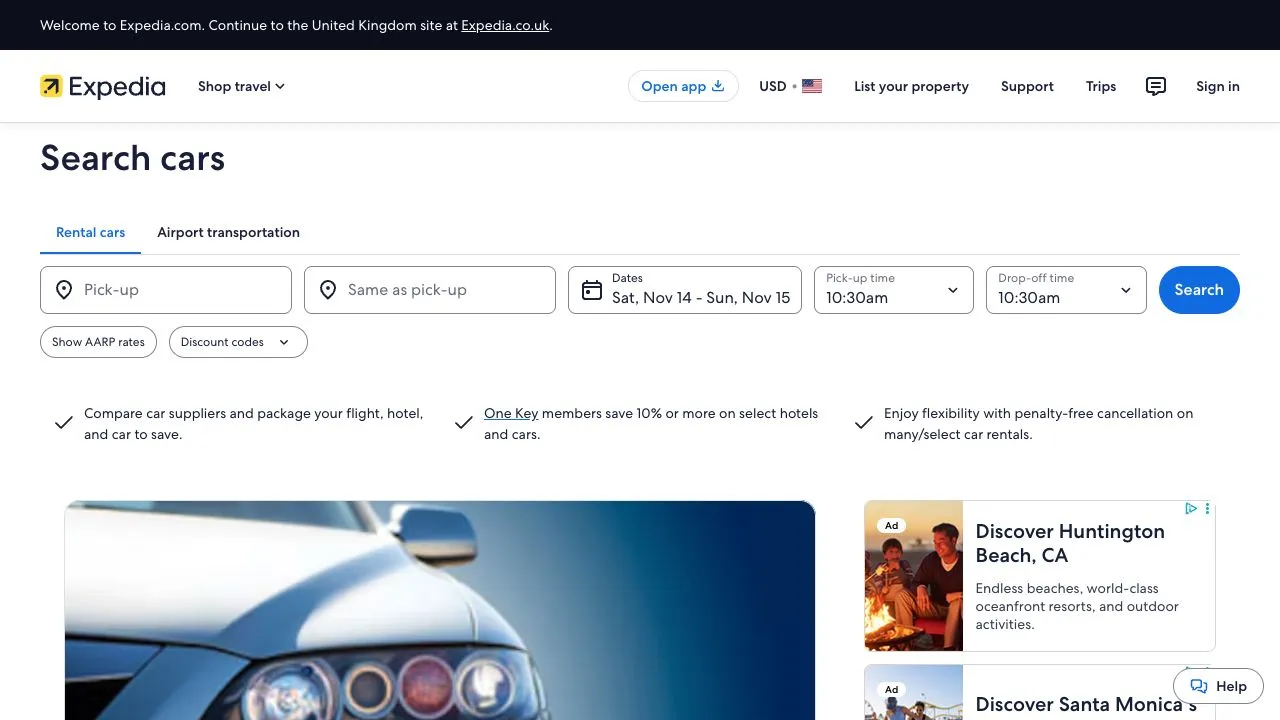
Across the sample, 263 Expedia ChatGPT ads link to its Flights, Cars or Hotel Search pages, compared with 16 Facebook ads using those same paths. Facebook also contains travel-report, destination and partnership campaigns; 105 of its 143 ads include video media.
That gives marketers two useful starting points. A social ad can introduce a trip someone had not considered. A task-focused ad can offer a clear next step when someone is already looking for transport or accommodation. We cannot see the exact conversation that preceded each ad, so treat that as a testing idea rather than a targeting claim.
What to try: take the useful part of your Facebook proposition and make a version built around one task. Give “compare car rentals” its own message and destination instead of sending every travel need to the homepage.
The Home Depot: make comparing as easy as buying
View the original The Home Depot ad images
Facebook ad preview in AdScan
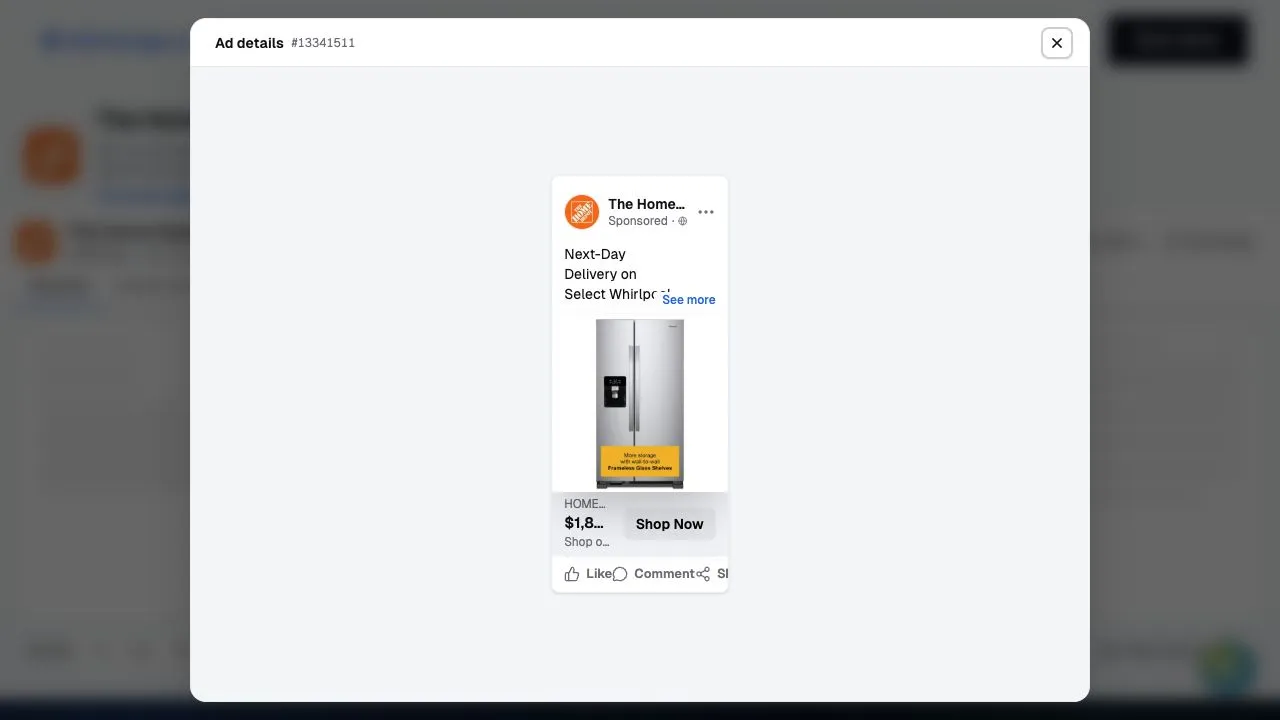
Original ChatGPT ad creative
Compare Dishwashers — Compare Top Dishwashers by Features and Price.
See this Facebook ad in AdScan · Open the ChatGPT ad’s destination
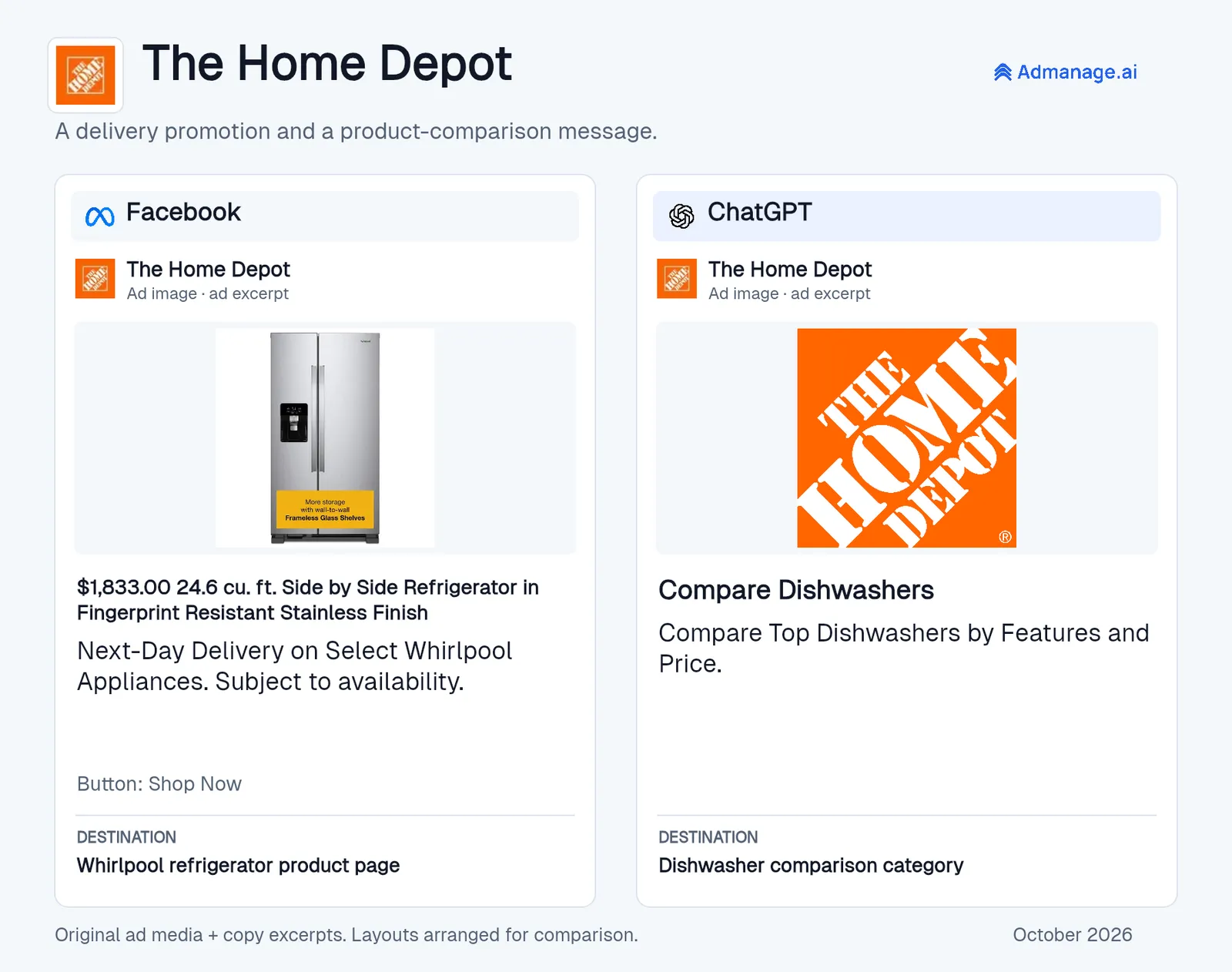
On Facebook: the Whirlpool appliance example puts a product and price in front of the viewer, with next-day delivery on selected appliances as the reason to act. Availability conditions apply.
On ChatGPT: “Compare Dishwashers” offers help with a choice: “Compare Top Dishwashers by Features and Price.” The destination is a dishwasher category page.
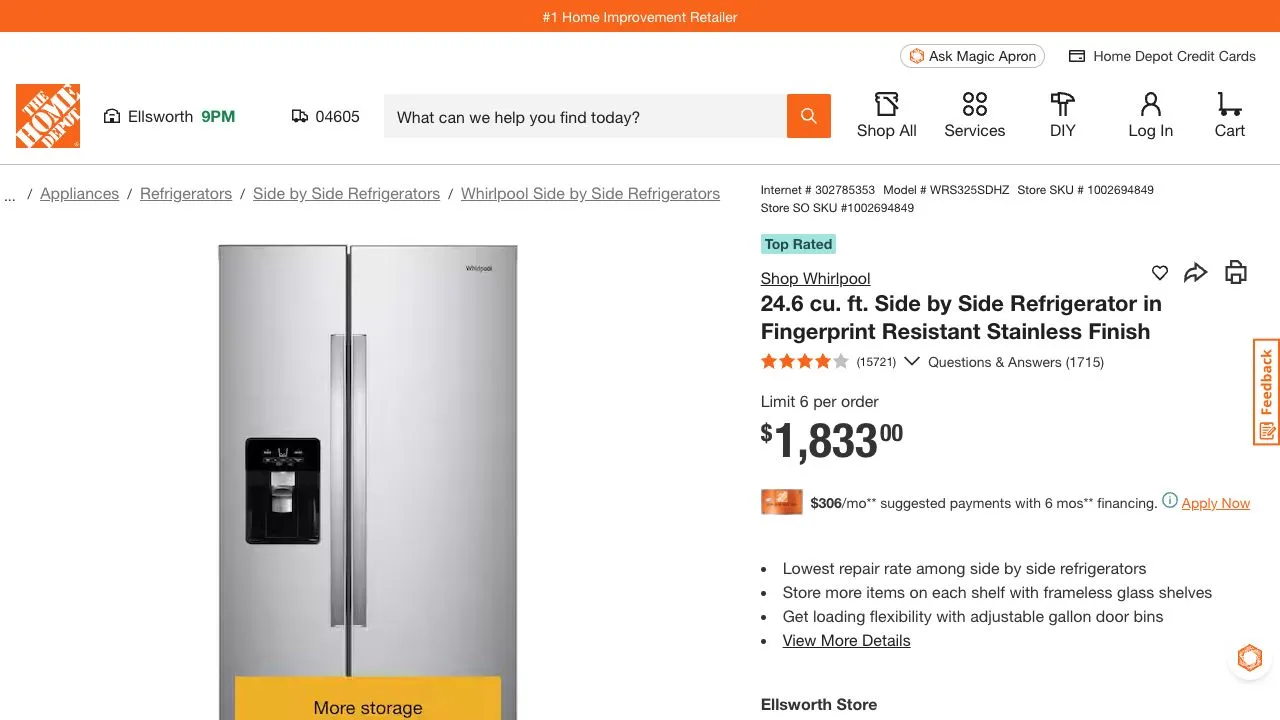
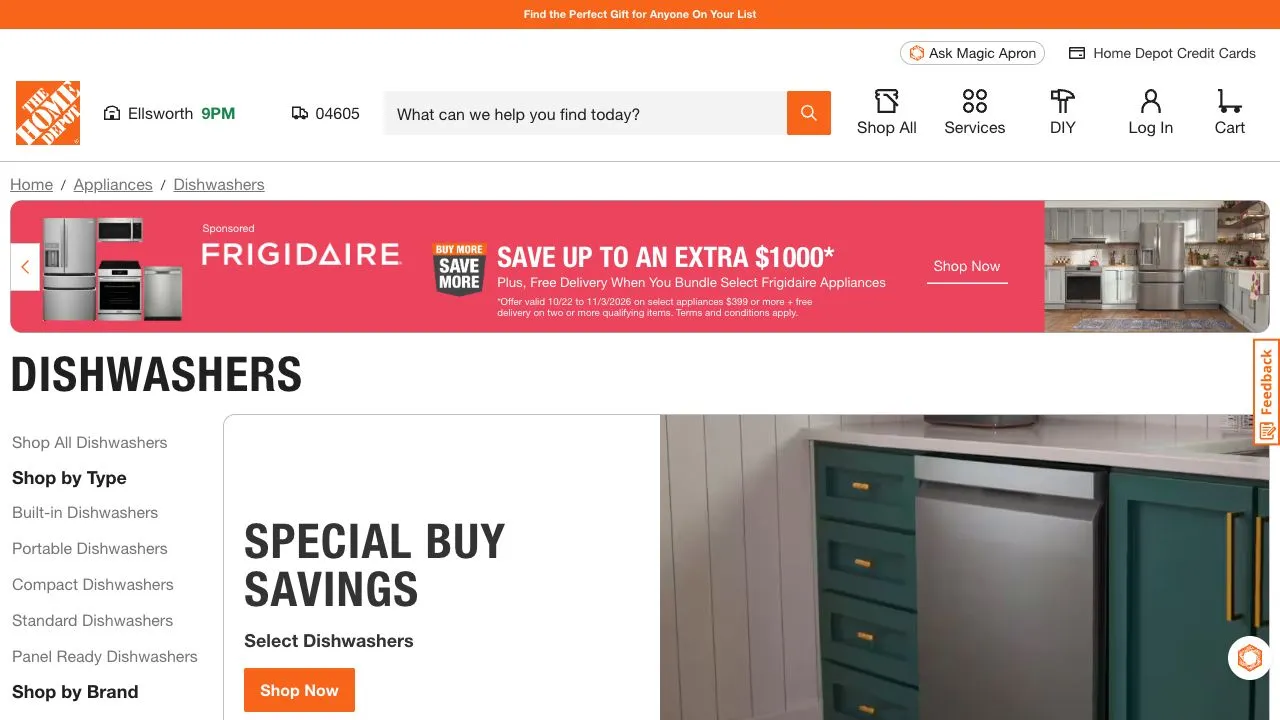
These examples serve different moments in a purchase. One promotes an appliance and delivery benefit. The other gives someone a place to weigh up their options.
The wider Facebook activity is broader too. It includes 123 ads linking to service pages, alongside product, recruitment and other campaigns. The ChatGPT sample is much more concentrated on shopping: 229 of its 258 ads link to individual product pages.
What to try: write both a comparison message and a purchase message for a category. Send each to a page that does the promised job. If the headline says “compare,” the next page should make features and prices easy to compare.
How to adapt your Facebook ads for ChatGPT
Start with one offer you already understand, then work through four decisions.
- Pick the job. Are you asking for an app install, a product purchase, a comparison or a booking? Back Market shows why that decision comes before copying a headline.
- Pick the product. Nike’s two channels feature different merchandise. Choose a relevant product and use case rather than transferring the whole Facebook campaign unchanged.
- Check the offer after the click. Hungryroot’s discount difference only becomes clear when you open the landing pages. Keep the ad and page together when reviewing a test.
- Make the destination fit the promise. Expedia’s car-rental ad opens car search. Home Depot’s comparison message opens the relevant category. That is a practical starting point for your own test.
Keep the performance review tied to your own campaign results. We can see the ads and destinations, but not which version made more money. Our creative reporting guide covers ways to review that evidence.
For more channel context, read our ChatGPT ads guide. To research your own competitors, start with the AdScan ad library, open their Facebook examples, and follow the landing pages as well as reading the copy.
About this comparison
We reviewed public ChatGPT ads captured during 16–31 October 2026 and publicly viewable Facebook ads available in AdScan with October 2026 start dates. We used five brands with usable matches in both sets and retrieved all available Facebook pages for that date filter. Coverage, geography and collection freshness differ, so this is not a complete count of either platform’s ads.
Ad totals include repeated messages and product variants. The Home Depot’s ChatGPT source pages had conflicting totals; we use the 258 ads actually retrieved. Counts do not measure spending, reach or conversions.
The comparisons show how the same brands present different offers and products. They do not establish that a team directly converted one Facebook ad into a ChatGPT ad. Images use original advertiser logos and ad media, with copy arranged for comparison; video examples use stills and longer descriptions are excerpted where marked. The landing-page images are actual browser screenshots captured on 31 October 2026. The side-by-side ad panels arrange original media and copy for comparison; they are not screenshots of the native ad interfaces.
Landing-page offers were checked on 31 October 2026 and can change. Advertiser and platform trademarks belong to their respective owners.

About the author
Cedric Yarish
Co-founder of AdManage.ai